Is Health Insurance Better? Term Life Insurance vs Health Insurance Explained
When building a financial safety net, two pillars often stand out: health insurance and life insurance.1 Both are critical tools for risk management, yet they serve fundamentally different purposes. A common question that plagues many young professionals and families is: “Which is best, health insurance or life insurance?”
The truth is, asking which is “best” is a bit like asking whether water or food is more important for survival—you eventually need both, but the urgency depends on your immediate situation. To help you navigate this decision, this article delves deep into the term life insurance vs health insurance debate, exploring their mechanisms, benefits, and the specific scenarios where one might take precedence over the other.
Understanding the Core Concepts
Before comparing them, we must clarify what each product actually does.
Health Insurance is a contract that covers your medical expenses. It is designed to protect your savings while you are alive. If you fall ill, require surgery, or meet with an accident, the insurer pays the hospital bills either directly (cashless) or through reimbursement. In a world of rising medical inflation, a single hospitalization can wipe out years of hard-earned savings without this cover.
Term Life Insurance, on the other hand, is a pure protection plan designed to protect your family’s future income in the event of your death. It does not pay you anything while you are alive (unless you opt for specific riders). Its sole purpose is to provide a substantial lump sum—the sum assured—to your nominees if you pass away during the policy term. This money can replace your lost income, pay off debts like home loans, and fund future goals like a child’s education.
Term Life Insurance vs Health Insurance: Key Differences
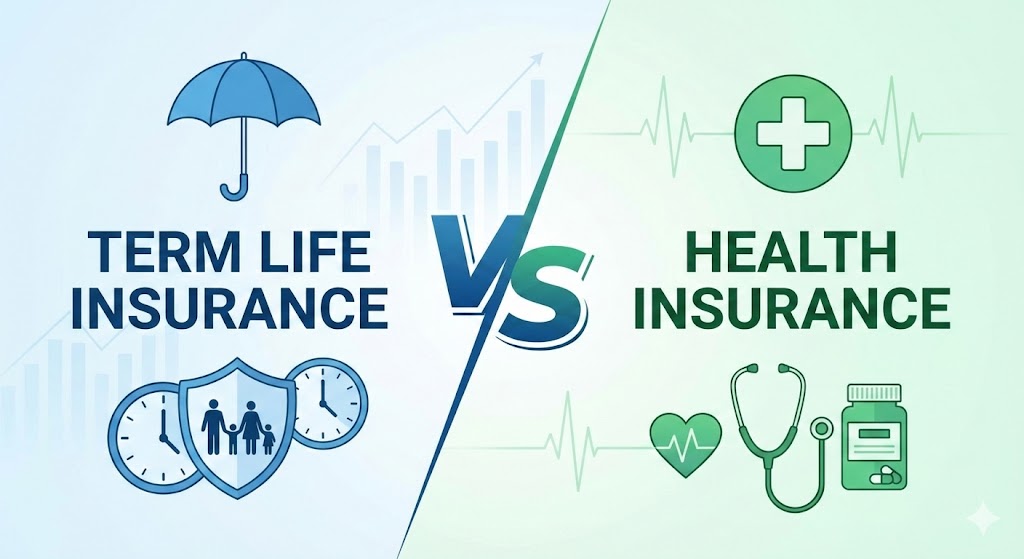
To make an informed choice, it is vital to understand the structural differences between these two financial instruments. Here is a breakdown of how term life insurance vs health insurance compares across various parameters:
1. The Primary Objective
The fundamental difference lies in who gets protected. Health insurance is self-centric in a positive way; it ensures you get the best medical care without financial stress. Conversely, term insurance is entirely selfless. You will never see the money from a pure term plan; it is strictly for the financial survival of your dependents after you are gone.
2. Coverage and Payouts
Health insurance works on an indemnity basis. This means it covers the actual cost of treatment up to the sum insured. If you have a ₹10 lakh policy and your bill is ₹2 lakh, the insurer pays ₹2 lakh. The remaining limit stays available for the rest of the year.
Term insurance works on a benefit basis. If you have a term plan of ₹1 Crore, your nominee receives the full, tax-free ₹1 Crore upon your death, regardless of what your financial obligations actually are at that moment.
3. Premium Structures
This is where the term life insurance vs health insurance comparison gets interesting. Term insurance is incredibly cheap, especially if bought young.12 A 25-year-old can often buy a cover of ₹1 Crore for as little as ₹500-800 per month. Once locked in, this premium typically remains constant for the entire policy duration (e.g., 30 or 40 years).
Health insurance premiums, however, are not fixed. They increase as you age because older bodies are more prone to illness.14 Medical inflation also drives up premiums periodically.15 While a health plan might start cheap, it will become significantly more expensive as you enter your 50s and 60s.
The Case for Prioritizing Health Insurance
If you have limited funds and can only afford one, most financial experts would point toward health insurance first. Why? Because the probability of needing medical care is statistically higher than the probability of dying prematurely.
Protecting Your Present Wealth:
Imagine you have saved ₹5 lakh for a down payment on a home. A sudden diagnosis of dengue or a road accident requiring surgery could cost ₹3-4 lakh easily in a private hospital. Without health insurance, your home-buying goal is instantly derailed. Health insurance acts as a shield for your existing assets.
Lifestyle Diseases are on the Rise:
We are seeing a spike in lifestyle-related ailments like diabetes, hypertension, and cardiac issues among people in their 30s. These are chronic conditions that require lifelong management. Securing a health policy early ensures that you are covered before these conditions develop, avoiding the “pre-existing disease” waiting periods or exclusions later.
The Case for Prioritizing Term Life Insurance
While health insurance protects your savings, term insurance protects your human life value. If you have financial dependents—parents, a spouse, or children—term insurance is non-negotiable.
Debt Protection:
Consider a scenario where you have taken a home loan of ₹50 lakh. If you pass away unexpectedly, the burden of that EMI falls on your grieving family. If they cannot pay, the bank may seize the house. A term insurance payout can instantly clear this debt, ensuring your family retains their home.
Income Replacement:
If you are the sole breadwinner, your salary pays for groceries, school fees, electricity, and more. Your death stops that income, but the expenses continue. Term insurance effectively acts as a replacement for your salary, allowing your family to maintain their standard of living.19
Scenarios: Which Should You Choose?
To truly answer “which is best,” we must look at where you stand in life.
- Scenario A: The Young, Single ProfessionalIf you are 24, unmarried, and have no dependents, Health Insurance is your priority. You need to protect yourself from medical bills.20 Since no one relies on your income for survival, term insurance is less urgent, though buying a small policy now to lock in low premiums is a smart strategic move.
- Scenario B: The Married Couple with DebtIf you are married and have a home loan or car loan, the term life insurance vs health insurance debate ends in a tie: you need both. Health insurance protects you from bills today, while term insurance ensures your spouse isn’t left with insurmountable debt if you pass away.
- Scenario C: The Sole Breadwinner with KidsHere, Term Life Insurance is critically important. While health insurance is still needed, the financial devastation of losing the primary earner is catastrophic. You must ensure you have a term cover at least 10-15 times your annual income.22
Why You Should Ideally Have Both
Ultimately, relying on just one form of insurance leaves a gaping hole in your financial armor.
If you only have term insurance and you get sick, you might survive the illness but go bankrupt paying the bills because your term plan won’t pay out while you are alive. Conversely, if you only have health insurance and you pass away, your hospital bills might be paid, but your family is left with zero income for the future.
The “Comprehensive Safety Net” Strategy:
The smartest approach is to view them as complementary tools.
- Buy Health Insurance to handle the “living costs” of medical care.
- Buy Term Insurance to handle the “dying costs” of lost income and debt.
Tax Efficiency:
Furthermore, both offer excellent tax benefits (specifically in India). Premiums for term life insurance are deductible under Section 80C, while health insurance premiums are deductible under Section 80D.Utilizing both maximizes your tax savings while securing your peace of mind.
Common Myths That Stop People from Buying
- “I have corporate cover, so I don’t need personal insurance.”Reality: Corporate health covers are often small (e.g., ₹3-5 lakh) and disappear the moment you leave the job or retire. Relying solely on your employer is a risky gamble.
- “I am too young to die, so I don’t need term insurance.”Reality: Term insurance is cheapest when you are young. Waiting until you are 40 to buy it will cost you significantly more over the policy’s life than if you had locked in the rate at 25.
- “Insurance is a waste of money if I don’t claim.”Reality: Insurance is not an investment for returns; it is a cost for certainty. You don’t hope to crash your car just to use your car insurance. Similarly, paying for health and term insurance is the price of ensuring your family never has to beg or borrow during a crisis.
Conclusion
So, regarding the question, “Which is best, health insurance or life insurance?” the answer is that neither is better—they are simply different.
Health insurance is your immediate defense against the rising costs of healthcare, protecting your bank balance today. Term life insurance is your long-term legacy, protecting your family’s lifestyle tomorrow. For a robust financial plan, the conversation shouldn’t be term life insurance vs health insurance, but rather how to effectively combine both to build an unshakeable fortress around your financial life.